Digital switchgearmaintenance.
Switchgear, documents and service records. One platform to schedule maintenance and explore the full history of each installation.
Every asset has a history. Every task has its time.
Paper reports, scattered information and hard-to-reconstruct maintenance histories make planning difficult. The platform addresses this by connecting each switchboard with its components, completed work and upcoming tasks in one platform.
- Asset management
- Scheduled maintenance
- Data analytics
Inside the platform.
Seven views follow the maintenance journey, from the installed base to each recorded measurement. The English interface refresh preserves the records in the original project screens.
The complete picture. Before the individual asset.
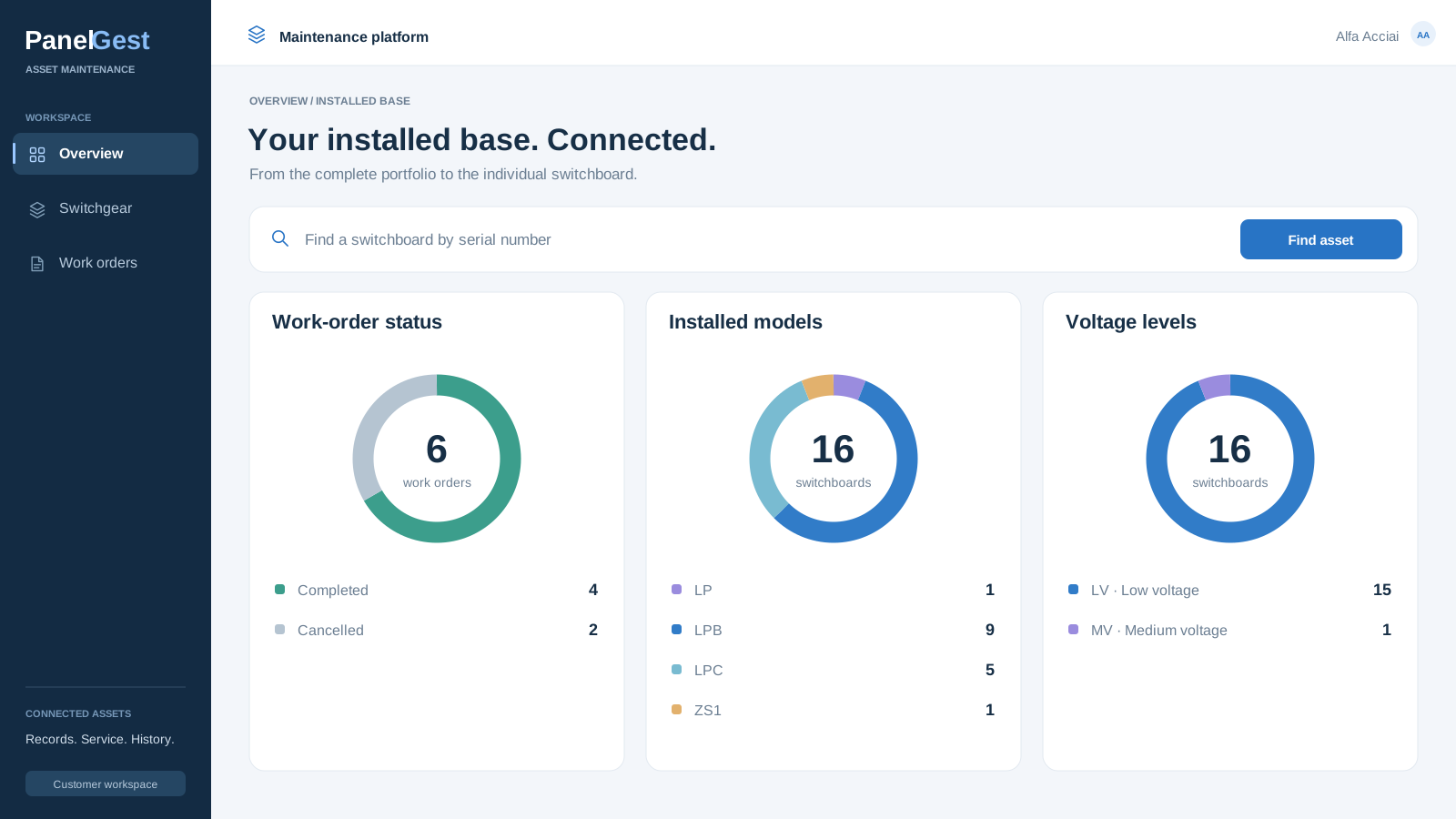
The overview brings together work-order status, installed models and voltage levels. A serial-number search opens the individual asset.
Every switchboard. A complete identity.
Serial number, installation, warranty and electrical specifications stay connected to the same asset. Its photograph supports identification; its technical data prepares the work.
The right document. In the right place.
Manuals, test reports and drawings are available from the switchboard record. The team preparing a visit finds documentation in the context of the equipment.
The asset’s memory. Visit after visit.
The timeline connects dates, work orders and completed tasks. Date and maintenance-type filters reconstruct the asset’s history before its next visit.
From the work order. To each individual task.
Each work order brings together its tasks and their status. The same view opens checklists, customer information, attachments and measurements.
Work in the field. Becomes shared knowledge.
Checks are recorded using a shared structure. Results, comments, spare parts, labour and repair notes create a service report that remains available over time.
From measurements. To the asset’s evolution.
Measurements stay linked to their date and component. This view compares recorded values: here, breaker pole temperatures in a table and a time-series chart.
What we designed.
Value comes from connecting the asset model, the operational process and historical data. The project calls for a dedicated platform and an information model suited to electrical maintenance. This foundation enables structured analysis and prepares the data for potential future AI development.
Build the digital asset record
Each switchboard brings together its photograph, serial number, installation, warranty and electrical and mechanical parameters. Manuals, drawings and test reports share the same record as its installed components.
Organise maintenance and data collection
Work orders and checklists connect planning to completed tasks. Technicians record checks, comments, spare parts, labour and repair notes; each step adds to the asset’s history.
Turn historical records into analysis
The installed-base overview separates models, voltage levels and work-order states. Tables and charts compare measurements recorded on switchboards and breakers over time.
Switchgear, components and documents
Work orders and checklists
History, measurements and next tasks
From the asset recordto the next decision.
The project structures the maintenance cycle: understand the switchboard, plan the work, record the findings and use the history to prepare the next maintenance task.
A digital memory for maintenance.
Technical record
The switchboard’s identity connects specifications, location and components.
- Serial number and installation
- Voltages, currents and IP rating
- Warranty and breakers
Connected documents
Technical knowledge remains available in the context of the asset.
- Technical manuals
- Test reports
- Electrical and mechanical drawings
Tasks and measurements
Every service visit adds information to the switchboard’s history.
- Checklists, notes and spare parts
- Temperature and insulation
- Breaker operation counts
One asset. Its entireoperational history.
Switch between views to explore how the platform organises maintenance.
Start with the switchboard’s identity.
The digital record organises properties and components. Every update stays linked to its asset.
- Type · Low-voltage switchboard
- Location · Plant and department
- Components · Breakers and connections
A shared digital representation.
Make the next maintenance task visible.
Scheduled activities share one workspace, with upcoming tasks and alerts. The plan follows the needs and priorities of the plant.
- Periodic inspection
- Circuit-breaker maintenance
- Review of reported anomalies
Activities and schedules linked to assets.
Every activity leaves useful data.
Checklists structure the record of the work. Operations, findings and outcomes update the accessible history.
- Completed work
- Inspection findings
- Anomalies and notes
Data collected in a consistent structure.
Read the history to inform the next decision.
The dashboard connects assets and maintenance work, highlighting recurring issues and aspects to investigate in the next planning cycle.
- History by asset
- Recurring anomalies
- Investigation priorities
Information to guide maintenance and resources.
A complete, digital maintenance process.
The asset model, maintenance workflow and analytics share the same information foundation.
Digital representation and history
The digital twin described in the project is an information-based representation of the asset linked to maintenance data.
- Switchboard record
- Photograph, serial number, installation and warranty identify the switchboard. Insulation voltage, rated current, short-circuit rating and IP ratings describe its specifications.
- Post-maintenance task updates
- Data collected during maintenance updates the record and builds the asset’s history.
- Shared access
- The customer and maintenance team can consult information and prepare subsequent activities.
- Technical archive
- Manuals, test reports and drawings are accessible from the asset record.
Planning, checklists and alerts
The software structures activities around the needs of electrical maintenance.
- Plan
- Maintenance work are organised around plant needs and priorities.
- Record
- The work order is divided into tasks, each with its own status. Checklists capture results; spare parts, labour, attachments and notes complete the report.
- Track schedules
- Digital alerts help teams follow the maintenance programme and keep planned work visible.
Dashboards and recurring issues
Structured history makes it easier to understand how assets evolve and to guide subsequent work.
- From asset to maintenance task
- The installed base can be explored by model and voltage level. The individual asset’s timeline connects work orders, dates and completed tasks.
- Measurements over time
- Busbar and pole temperatures, insulation resistance and breaker operations can be recorded and compared by period and component.
- Priorities and resources
- Managers can use this information to assess future maintenance work and resource allocation.
A platform built around the process.
The vertical solution covers low-voltage switchgear and primary and secondary medium-voltage switchgear. The approach starts with asset records, procedures and maintenance task data, adapting them when the asset family changes.
Technical assessments and maintenance task decisions remain with maintenance managers. The platform organises the information, activities and history that support them.
Questions that need a clear view
- Which activities are scheduled for this switchboard?
- Which anomalies emerged during previous maintenance work?
- Which checklist is needed for the planned activity?
- Which recurring issues deserve attention in the next planning cycle?
What it makespossible.
- Technical records and documentation brought together for every switchboard.
- Work orders, checklists and reports linked to the asset’s history.
- Measurements comparable by date and component, from tables to charts.
Want to bring assets, maintenance work and schedules into one platform?
Want to bring assets, maintenance work and schedules into one platform?
Tell us about your project
AI for assessment and management development.
32 skills, understood through their relationships. Three AI agents turn assessments into descriptions, training priorities and personalised development suggestions.