AI for engineering design and simulation.
An applied training programme for a highly specialised engineering team: using LLMs, code and AI tools to explore digital models, simulations and new approaches to design.
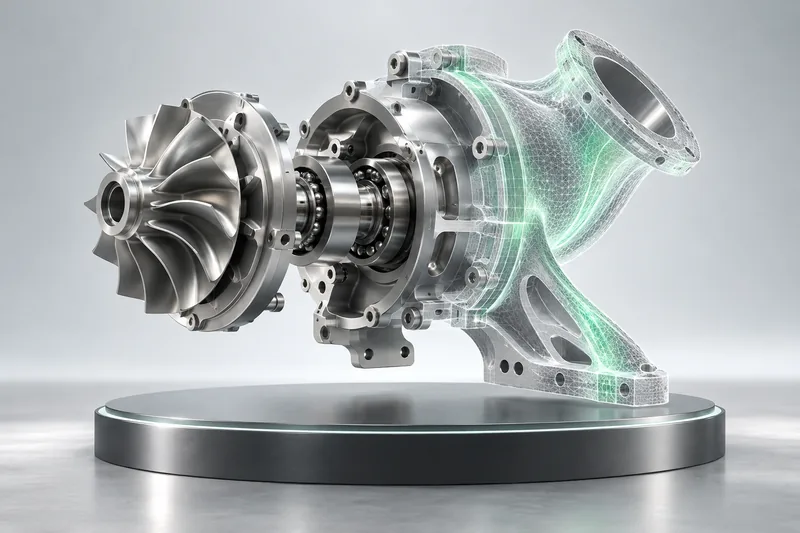
Strengthen R&D by building on engineers’ expertise.
For a company with strong engineering expertise, competitive advantage comes from the ability to design complex solutions. The challenge was to bring Generative AI into core Research & Development activities: from scientific research and reasoning about models to coding and simulation. The programme needed to speak the language of engineers and researchers and connect tools to concrete technical problems.
- R&D and design
- LLMs and coding
- Applied technical training
The technical training programme
The engagement combines training and technical consulting because its value depends on domain knowledge. Engineers define requirements, assumptions and verification criteria; LLMs support research, formalisation and coding. Simulation provides a testbed for comparing configurations and making design trade-offs explicit.
Build a shared technical foundation
The programme combined Generative AI fundamentals, how LLMs work and their limitations, scientific research tools and approaches to building assistants and agents. The starting point is understanding what to entrust to AI and how to assess its outputs critically.
Work on R&D use cases
The practical component connects the team’s needs with tool selection and guided experimentation. Areas covered include literature research, technical documentation, assisted coding and model development to explore the behaviour of devices and components.
Connect experimentation and strategy
Discussions with management and technical leaders connect AI opportunities with research priorities and internal expertise. The aim is to identify which experiments to pursue, which capabilities to strengthen and where specialist development is needed.
Requirements, scientific knowledge and R&D cases
LLMs, coding and guided experimentation
Applied capabilities and development priorities
More room to explore.More value from expertise.
The format is training; the working environment is technical: helping specialists experiment with AI in the activities that determine the company’s competitive advantage.
Three areas to connect.
Scientific knowledge
Research and critical reading of information that can guide development.
- Papers and scientific literature
- Patents and technical references
- Assumptions to investigate
Models and software
Support for formalisation and coding to make a problem explorable.
- LLM-assisted coding
- Digital component models
- Simulation and visualisation
Team expertise
Specialist knowledge guides use-case selection, evaluation and future development.
- Software and electronic circuits
- Mechanical and electro-optical engineering
- Technical leaders and management
From requirementsto comparing solutions.
An example of the reasoning introduced in the programme: use AI to help engineers build and query a model while retaining technical control.
Start with the engineering problem.
Define the device or component, operating conditions, constraints and parameters for comparing alternatives. The team’s expertise gives the model its meaning.
- Analytical design requirements
- Assumptions and operating conditions
- Performance targets and constraints
An explicitly formulated design problem.
From knowledge to code.
The LLM assists the team in exploring literature, formalising relationships and writing code. Code makes the model executable and enables analysis.
- Assumptions and mathematical relationships
- Code to run and verify
- Configurations to compare
A digital model to develop, check and refine.
Explore different configurations.
The model supports reasoning about scenarios as parameters change. Cost, production effort, sustainability and performance become criteria for assessing trade-offs and searching for configurations that meet requirements.
- Parameter variation
- Comparison of alternatives
- Exploration of design trade-offs
Simulation scenarios that support design decisions.
Engineering judgement remains essential.
The team examines assumptions, code and results against technical references and available data. A training experiment is a starting point for further development and validation.
- Checking assumptions and code
- Comparison with references and data
- Choosing what to investigate next
A verification path before use in engineering design.
Theory, practice and strategic direction.
The programme combines technical foundations, exercises on selected cases and discussions about Research & Development priorities.
Understand and select the tools
A shared foundation for informed use of AI in specialist work.
- Fundamentals
- Machine Learning, Generative AI, LLMs, knowledge bases and model limitations.
- Research and coding
- Tools for exploring scientific knowledge, developing code and visualising results.
- Assistants and agents
- The roles of instructions, data, tools and orchestration; comparing configuration, low-code approaches and custom development.
Experiment on selected technical cases
Practical work starts with the team’s challenges and the outputs it wants to achieve.
- Case selection
- Joint assessment of relevance, feasibility and value for engineering design.
- Guided practical work
- Configuring tools and assistants, using company materials, testing and critically comparing results.
- Models and digital twins
- Exploring how LLMs can support digital representations and simulations. Applications require a model consistent with the phenomenon and specific verification.
Build continuity into experimentation
Strategic discussions help turn technical ideas into development priorities.
- Opportunities and priorities
- Assessing applications against business and R&D objectives.
- Capabilities and resources
- Identifying internal skills to strengthen and the specialist support needed.
- Next steps
- Outlining a preliminary roadmap covering immediate experiments and medium- and long-term development.
Digital twins as an application area.
The possibilities explored include building digital models of devices and components to simulate behaviour and compare configurations. This case describes a technical training programme: developing an operational digital twin requires dedicated scoping, data and validation.
Validating models, code and results remains part of engineering work: the programme develops the tools to approach it with understanding.
Questions for the technical team
- Which part of the design process is worth modelling?
- Which requirements and parameters should guide simulation?
- Where can LLM-generated code help?
- How do we verify that the results are usable?
The capabilities we worked on
- Understanding the potential and limitations of LLMs in engineering design.
- Connecting AI tools and code to relevant R&D use cases.
- Exploring digital models and parametric simulations with explicit verification criteria.
- Assessing priorities, capabilities and next steps with management.
Want to bring AI into the heart of your Research & Development?
We start with your team’s design challenges to build a tailored technical and practical programme.
Tell us about your project
Quantitative engine for banking pricing.
Quantitative models for assessing the expected financial impact of repricing accounts and fees. Experience connecting contractual terms, costs and scenarios to support bank decisions.