AI for biochemicalprocess optimisation.
Process data, expert knowledge and scientific research. An AI architecture to explore know-how and guide process improvement.
Process data, expert knowledge and scientific literature form complementary sources for the architecture.
Semantic memory and an AI assistant help researchers ask questions and navigate relevant evidence.
KPI frameworks and predictive modelling are development directions. Experts assess hypotheses before experimental validation.
Process knowledge.A new capacity for research.
In biochemical processes, experimental data tells only part of the story. Operational context, people’s experience and scientific literature are equally valuable. This project connects those sources to make knowledge more accessible and prepare a path toward data-informed improvement.
- Data Intelligence
- Scientific AI
- Process optimisation
The project work.
The work starts with information quality and the ability to explore it. The architecture connects structured data, scientific knowledge base and an AI assistant, with a development path toward indicators, models and optimisation hypotheses.
Assess and organise data
Assessment of available sources, comparison with information needs and identification of gaps. A foundation for making data comparable and prioritising the next steps.
Make knowledge searchable
Selected literature is organised into semantic memory, including topic-based retrieval. An AI assistant enables natural-language exploration while retaining document references.
Design the optimisation pathway
The architecture provides for KPI frameworks, predictive models and solution exploration. These developments aim to generate hypotheses and compare scenarios for expert assessment and experimental validation.
Data, experience and literature
Scientific knowledge base and an AI assistant
Research and hypotheses to validate
Three sources.One connected view.
Measurements, context and scientific knowledge each contribute to understanding the process.
The architecture’s foundations.
Process and laboratory data
Quantitative information to organise, check and compare over time.
- Data quality
- Experimental context
Expert knowledge
People’s experience gives meaning to data and helps interpret what numbers alone cannot explain.
- Operational know-how
- Interpretation
Scientific literature
Selected publications organised into a knowledge base that can be explored by topic.
- Semantic search
- Source references
A concrete foundation.A path for development.
The project documents data assessment, the creation of scientific knowledge base and its connection to an AI assistant. KPIs, predictive modelling and solution exploration form the development architecture.
Improvement hypotheses require expert assessment and experimental validation.
From information.To the right questions.
- Which information is missing to better understand the process?
- Which scientific evidence helps investigate a process issue?
- Which hypotheses warrant experimental validation?
The foundations built.
- A map of available sources and information gaps.
- Scientific literature accessible through an AI assistant.
- A shared architecture to guide subsequent research activities.
Turn your know-howinto new research possibilities.
Start with the knowledge you have and the questions you want to answer.
Tell us about your project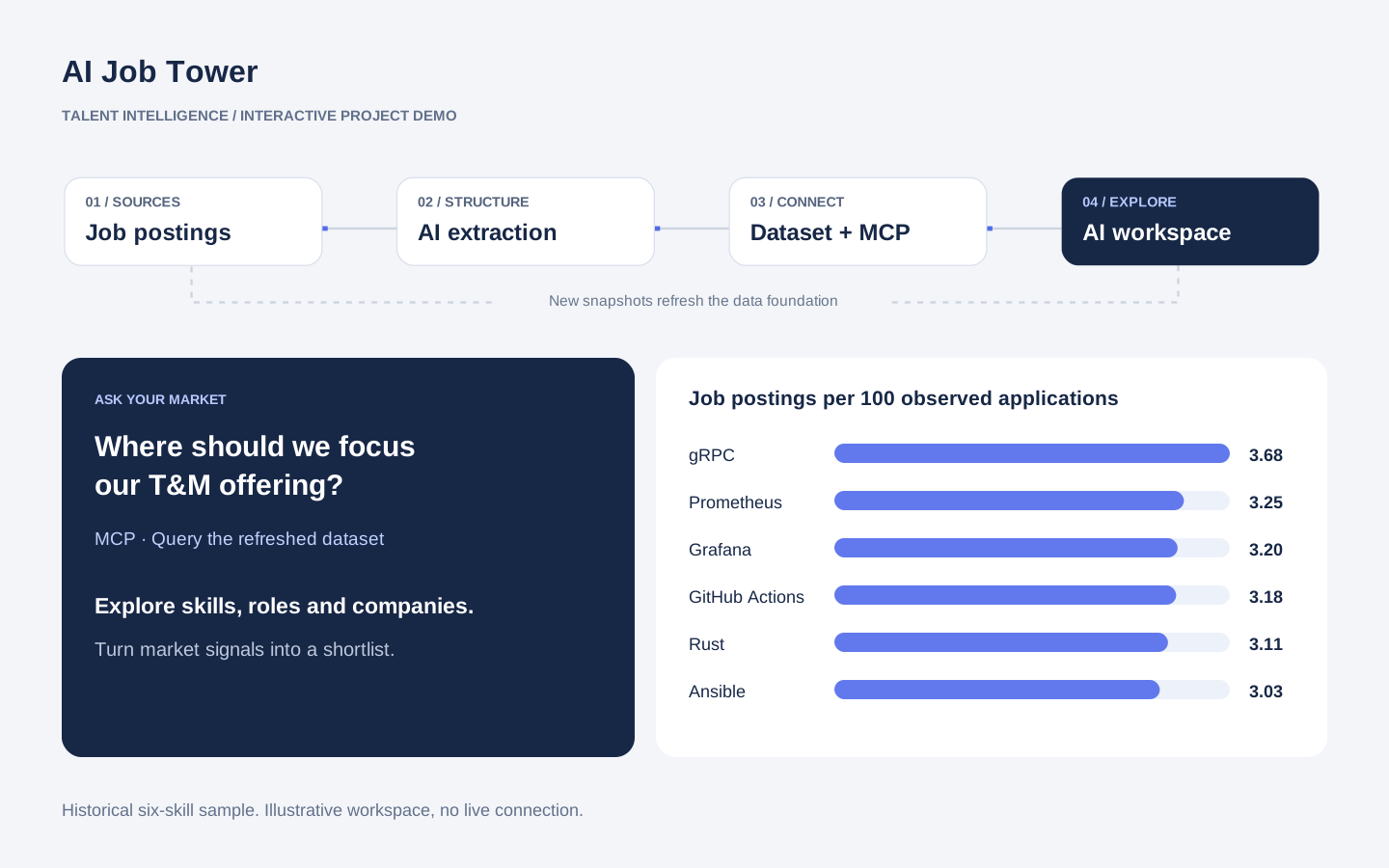
AI Job Tower: explore talent market insights through conversation.
AI Job Tower turns job postings into a continuously updated labour market intelligence platform: skill premiums, trends and company signals to inform staffing, upskilling and business development.