An AI assistantfor maritime assets.
Consumption, systems and maintenance. Vessel data becomes a conversation, from onboard sources to the answers people need.
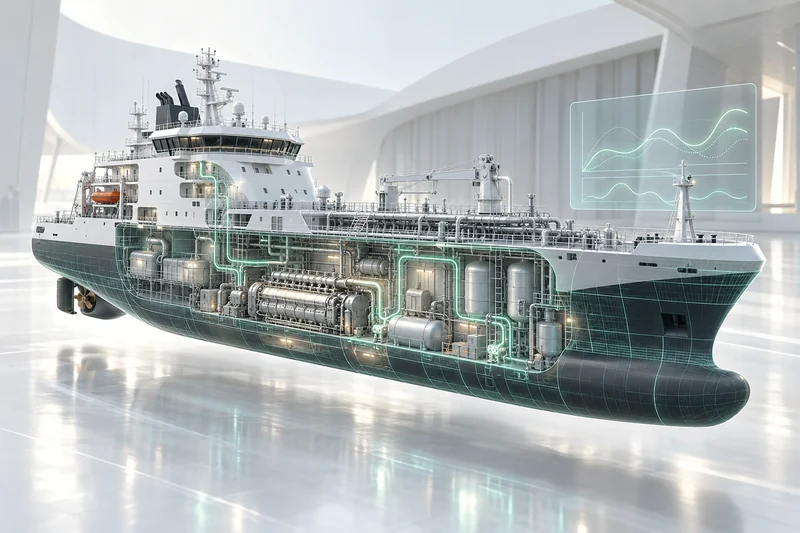

Ask a question. Explore your assets.
Vessel data is spread across monitoring systems, files, procedures and maintenance records. Understanding consumption or investigating an anomaly means connecting these sources, understanding the context and choosing the right analysis. The assistant was designed to make this information accessible through conversation.
- Conversational AI
- Data integration
- Asset analytics
What we designed.
The conversational interface is the entry point to a broader system. Source integration, data preparation and calculation tools turn a question into a contextual analysis. The three components — Data Mining, Intelligence and Interface — separate these responsibilities and allow the platform to be adapted to the company’s assets.
Connect data and context
A data mining module integrates sources such as Excel, CSV and SCADA systems alongside operating documents and maintenance records. Data preparation accounts for the shipowner’s existing structures and the information needed to analyse vessels, onboard systems and fleets.
Give AI analytical tools
The intelligence module interprets the request and uses analytical tools, including Python calculation functions, to process data. AI can break a question down into analysis tasks and explain the result in accessible language.
Bring conversation into daily work
The interface module makes analysis accessible through a dedicated chat or integrations with channels such as WhatsApp and Telegram. The interaction centres on questions from operational staff, maintenance teams and management.
SCADA, files and operating documents
Data preparation + AI + analytical tools
Asset conversations and analysis
Data is only the start.You need to be able to question it.
The maritime case brings together heterogeneous sources, operational knowledge and analytical tools. The same approach can be adapted to plants and other complex assets.
The information entering the system.
Operational data
Measurements and historical records from onboard systems and available archives.
- Energy and fuel consumption
- Operating parameters
- SCADA, Excel and CSV data
Technical knowledge
Documents that help interpret data in the context of the asset and its operations.
- Operating procedures
- Maintenance records
- Available documentation
Fleet context
Information for comparing performance and asking questions about comparable assets.
- Vessel and onboard system
- Operating conditions
- Sister-vessel comparisons
From onboard systemsto the question that matters.
Explore the three modules and how they connect data, analysis and conversation.
Sources become a shared context.
Measurements, files and documents are prepared to be read together. Vessel and system references give each piece of information meaning.
- SCADA · Operational data
- Excel / CSV · Historical records
- Documents · Procedures and maintenance
An information foundation linked to the asset.
The question activates the right tools.
AI interprets the request and coordinates analysis and calculations on available data. Value comes from combining domain knowledge with analytical tools.
- Interpret the question
- Access data and calculation tools
- Process and explain the result
Quantitative analysis made understandable.
Talk to the data from your assets.
Chat provides access to consumption, performance and historical records. Follow-up questions explore the context without switching between separate archives.
- Compare consumption in port and at sea.
- Explore the differences between sister vessels.
- Show the maintenance history of this system.
An accessible interaction through dedicated chat or integrated channels.
Three modules. One conversation.
The architecture separates source preparation, processing and the user experience.
Data Mining · Integrate and prepare
The first step is understanding which data is available and how to use it together.
- Heterogeneous sources
- Excel and CSV files, SCADA systems, procedures and records can contribute to the same information foundation.
- Data readiness
- The shipowner’s data structures are analysed and prepared for integration around the questions to be addressed.
- Updates
- Acquisition frequency depends on the connected sources. Operational streams can update the context used for analysis.
Intelligence · Interpret and process
A natural-language question becomes a set of analytical tasks on the available data.
- Understanding the request
- The AI interface interprets the question and its context.
- Calculation tools
- Analytical functions, including Python tools, support quantitative processing beyond text generation.
- Predictive extensions
- Dedicated models can extend the system to scenarios and anomalies, with development and validation on the specific asset’s data.
Interface · Make analysis accessible
Conversation brings information to the point where people working with assets need it.
- Dedicated chat
- A tailored interface supports follow-up questions and deeper exploration of the data.
- Messaging channels
- The solution includes provision for WhatsApp and Telegram integrations, depending on how it will be used.
- Operational users
- Onboard staff, maintenance teams and management can ask questions relevant to their activities.
From vessels to your company’s assets.
Consumption, performance, maintenance and operations are the first areas to explore. The starting point is the sources actually available and the questions to answer; integrations and analytical tools are developed around that scope.
Analyses are defined around available sources and operational questions. Predictive extensions require dedicated models and validation.
Examples of questions to enable
- How does consumption change between sailing and time in port?
- What differences emerge between comparable vessels?
- Which maintenance activities are recorded for this onboard system?
- Which data is needed to assess an energy-efficiency scenario?
What it makespossible.
- Natural-language access to operational data and asset knowledge.
- Energy and performance analysis in the context of vessels and fleets.
- A modular structure for extending data sources, questions and interaction channels.
Want to make the data from your equipment, vehicles or assets conversational?
Want to make the data from your equipment, vehicles or assets conversational?
Tell us about your project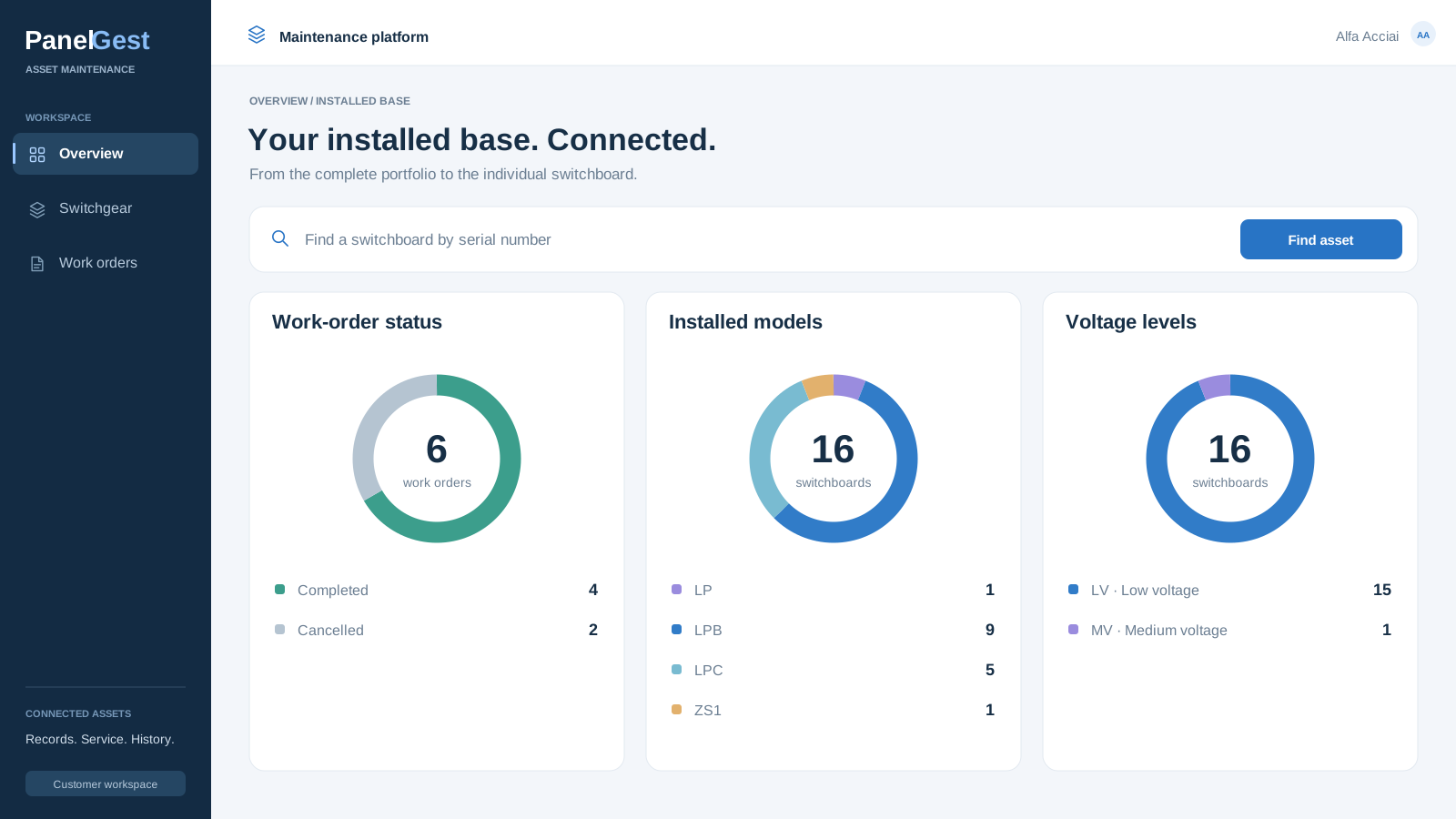
Digital switchgear maintenance.
Switchgear, documents and service records. One platform to schedule maintenance and explore the full history of each installation.